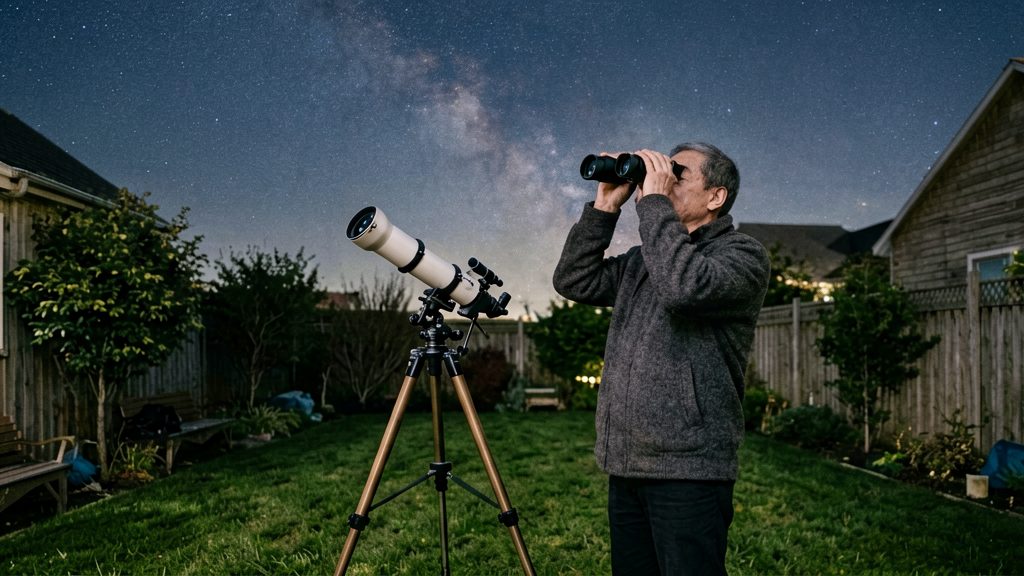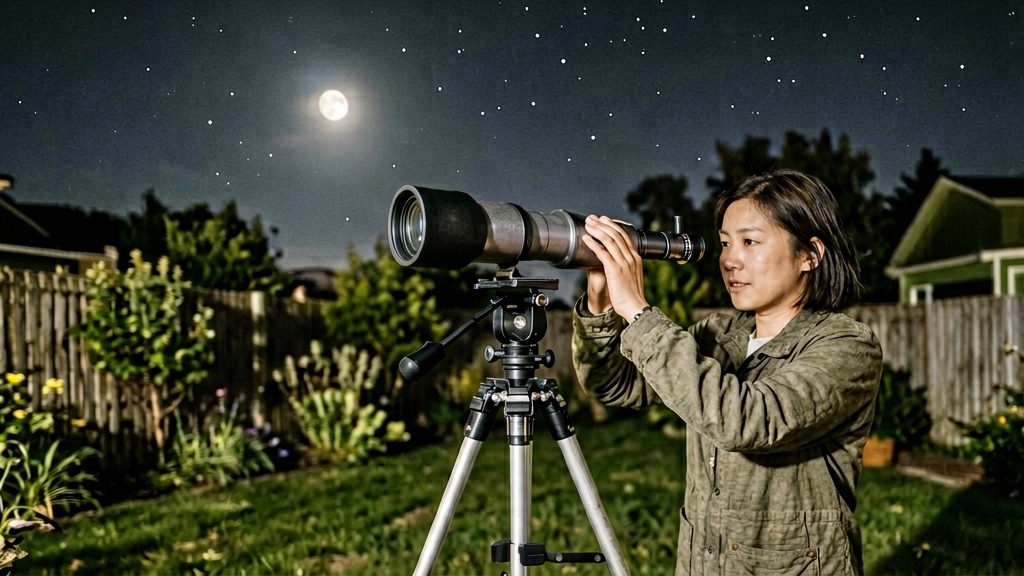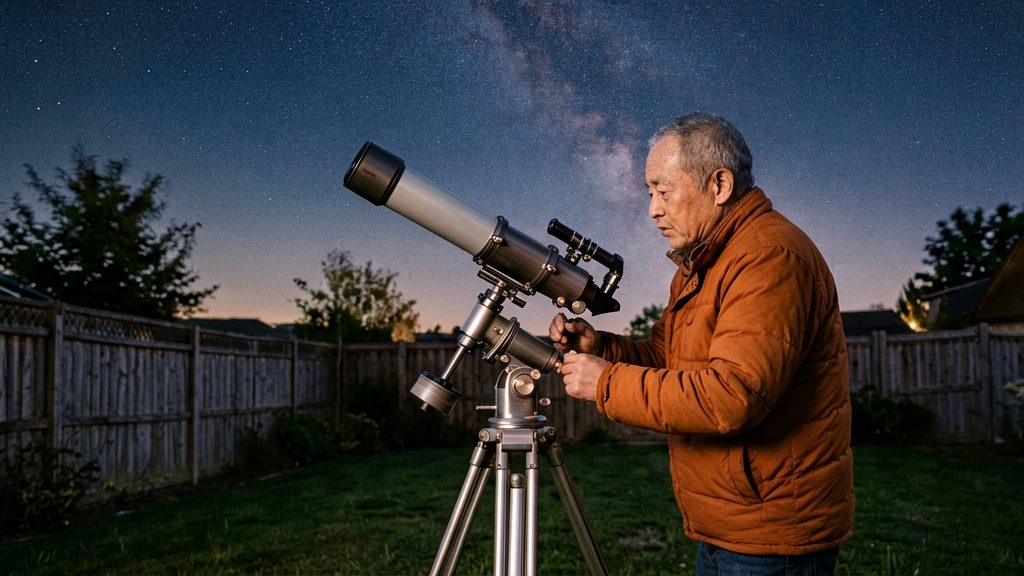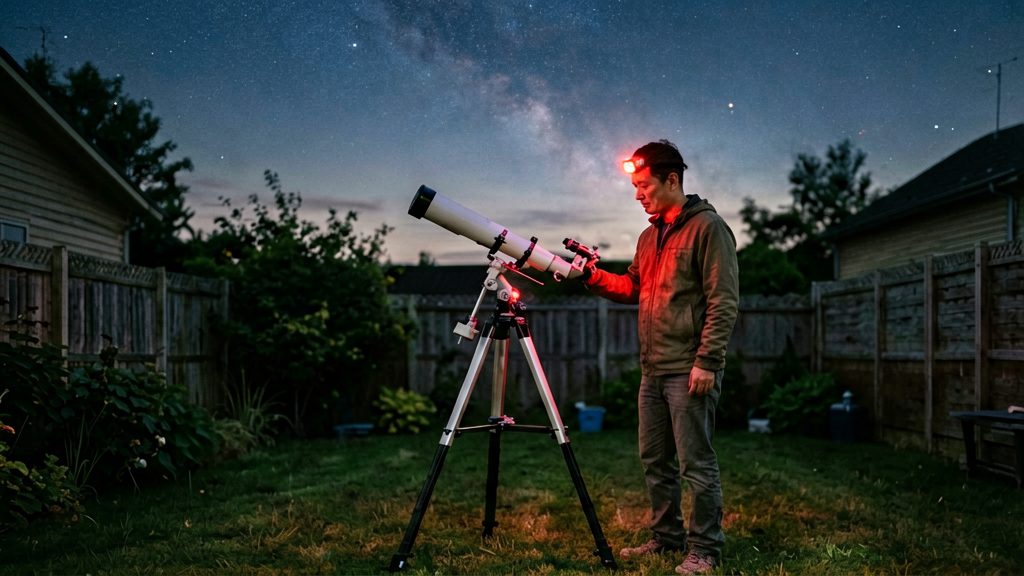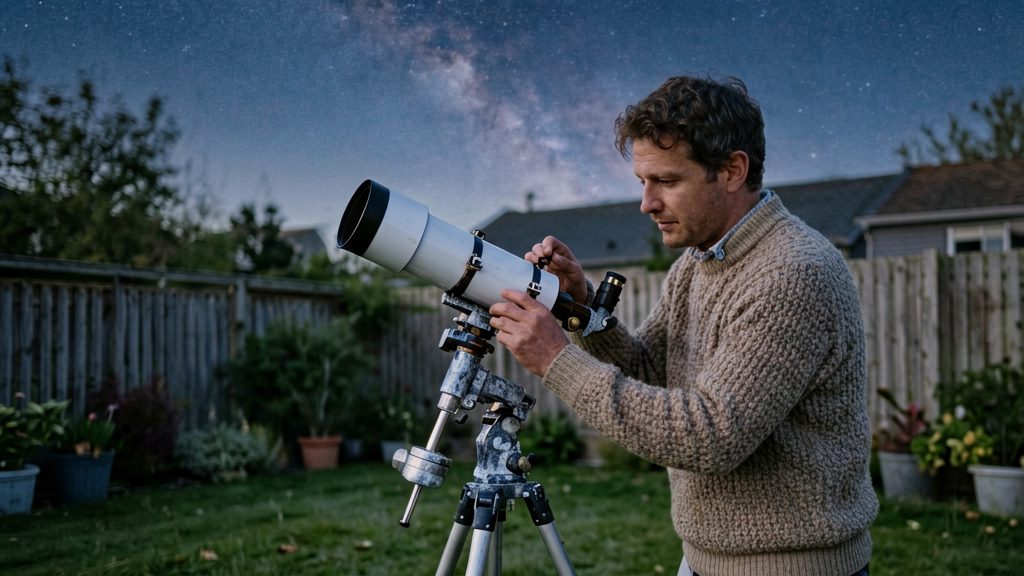
A sturdy optical instrument gives a child views that a plastic toy scope cannot, because two things decide what the eye actually sees: the quality of the optics and the rigidity of the mount. Under $200, the difference shows up in image sharpness, in whether a target stays centered, and in whether a child keeps observing past the first night.
Why a real telescope beats a toy
Optical quality against plastic lenses
Most scopes under $100 are toy-store scopes, according to Mile High Astronomy (2018-04-13). The more useful measure is aperture, the diameter of the main lens or mirror. Mile High Astronomy states that aperture matters most and that useful maximum magnification is about 2x the aperture in millimetres. A 70mm scope therefore tops out near 140x, and a 100mm scope near 200x.
A larger aperture shows the Moon’s edge and planetary surface features sharper and less washed out. A child who sees a clear image learns what a telescope is for. A child who sees a blurred one often concludes the hobby is dull.
A stable mount keeps targets centered
A wobbly tripod is the fastest way to lose a target. Touch the tube and the Moon swings out of the eyepiece.
Realistic views of the Moon and planets
The Moon’s brightness makes it easy to find, and a small aperture is enough to show craters and the terminator, the line between light and shadow.
Planets appear as small disks, not the large images seen in photographs. A sturdy mount lets a child hold a planet in the field long enough to notice its shape and any markings.
What should a kid’s first telescope offer?
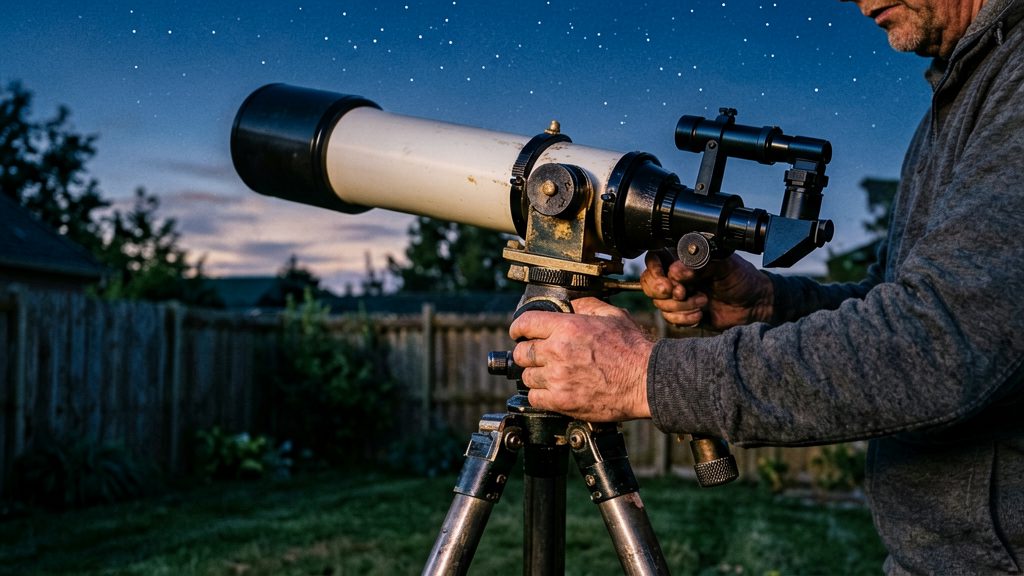
A child’s first scope should be judged on how easily it can be set up, aimed and carried, not on its advertised power. Four features matter most: a simple alt-az or tabletop mount, two eyepieces including a low-power one, a light body with a simple carrying case, and a design that needs little upkeep. Ideally the scope should be quick enough to use on a weeknight that the child actually goes outside to look.
Mount: alt-az or tabletop first
For young children, the mount matters as much as the optics. According to Mile High Astronomy (2018), cheap equatorial mounts are unstable and frustrating for kids, so an altazimuth (alt-az) mount, which moves up-down and left-right, is the better choice. OPT Telescopes (2026) likewise names simple alt-az or tabletop Dobsonian mounts as the easiest to use.
Check these points before buying:
- The mount moves smoothly in both directions without wobbling after a small nudge.
- Tap the tripod lightly: the image should settle within a second or two, since wobble is the usual complaint with cheap tripods.
Eyepieces: two, one of them low power
A kit with two eyepieces covers both wide views and closer looks. The low-power eyepiece gives the widest field, which makes it easiest to find objects and to keep them in view. The higher-power eyepiece is for detail on the Moon or brighter planets. An eyepiece set chosen for usability is more useful than one chosen for high numbers.
Weight and carrying case
Portability decides how often a scope comes out. OPT Telescopes (2026) lists the Celestron Travel Scope 70 at 3.3 lb with a backpack, which shows what a light, carry-ready kit looks like in practice. A child should be able to carry the whole setup, including the tripod, from indoors to the yard without help. Look for a bag or case that holds the tube, eyepieces and tripod together.
Low maintenance
For a first telescope, a refractor is the simpler choice, and a child is less likely to be discouraged by a scope that needs adjustment before every session.
Refractor, reflector or tabletop Dobsonian?
The optical design determines how much upkeep a telescope needs, how the image appears through the eyepiece, and how well it handles a child’s rough use. Refractors use a lens at the front of the tube and are sealed from the elements, which is why Astronomy magazine (2025-07-22) notes they need less maintenance than reflectors. Reflectors use a mirror at the back of the open tube and need regular collimation, the adjustment that keeps the mirrors aligned. A tabletop Dobsonian is a reflector on a simple base, so it carries the same maintenance and orientation traits.
| Design | Maintenance | Image orientation | Durability and handling |
|---|---|---|---|
| Refractor | Sealed tube, low maintenance (Astronomy magazine, 2025-07-22) | Check the diagonal and eyepiece in the manufacturer’s manual to confirm whether the view is erect | Small and durable (OPT Telescopes, 2026) |
| Reflector or tabletop Dobsonian | Needs regular collimation; open tube (OPT Telescopes, 2026) | Shows inverted views (OPT Telescopes, 2026) | Knocks can shift mirror alignment, so collimation may need rechecking |
Collimation in practice
Collimation is a repeatable routine rather than a one-time setup. Check the mirror alignment as the manual describes, using a collimation cap or a slightly defocused bright star. Then adjust the collimation screws until the pattern looks symmetrical. Repeat after each move, and after any bump. A child can learn this with an adult’s guidance, but it adds a step that a refractor does not require.
What inverted views change
Reflectors show the sky upside down. When a child moves the telescope, the image shifts in the opposite direction from what they expect, and a Moon or planet appears rotated compared with a printed chart. Give the child a short orientation session on the Moon before a first session with planets, so the reversed motion does not feel like a fault.
Best kid-friendly telescopes under $200
The strongest options under USD 200 are small refractors and tabletop reflectors on simple mounts. Astronomy magazine’s under-$200 picks (2025-07-22) are the Celestron FirstScope, the Meade Infinity 70mm AZ and the Celestron AstroMaster 70AZ. OPT Telescopes (2026) adds the Celestron Travel Scope 70. The Orion SkyScanner 100mm TableTop has the largest aperture in this group.
| Model | Design | Price (source) | Mount | Known trade-off |
|---|---|---|---|---|
| Celestron FirstScope 76 | Tabletop Dobsonian-style reflector | USD 74.95 (Astronomy magazine, 2025-07-22); USD 64.95 (OPT, 2026) | Tabletop | Lowest price in this group |
| Meade Infinity 70mm AZ | Refractor | USD 119.99 (Astronomy magazine, 2025-07-22) | Altazimuth | Cheaper of the two 70 mm altazimuth refractors |
| Celestron AstroMaster 70AZ | Refractor | USD 189.95 (Astronomy magazine, 2025-07-22) | Altazimuth | Highest price in this group |
| Orion SkyScanner 100mm TableTop | Tabletop reflector | USD 149.99 (Astronomy magazine, 2025-07-22) | Tabletop | Largest aperture in this group |
| Celestron Travel Scope 70 | Refractor | USD 109.95 (OPT, 2026) | Tripod | Tripod prone to vibration; ships with two eyepieces and a backpack, weighs 3.3 lb |
Tabletop options: FirstScope 76 and SkyScanner 100mm
The tabletop Dobsonian design uses a simple alt-azimuth motion on a low base, which keeps the setup light. The Celestron FirstScope 76 has a 76 mm (3-inch) aperture and is the cheapest option in this group.
The Orion SkyScanner 100mm TableTop reaches 100 mm (3.9-inch) and costs USD 149.99.
Altazimuth refractors: Meade Infinity 70mm AZ and AstroMaster 70AZ
Both models are 70 mm refractors on an altazimuth mount, which moves up-down and left-right and is easier for children to point than an equatorial mount.
The Meade Infinity 70mm AZ at USD 119.99 is the lower-priced of the two. The Celestron AstroMaster 70AZ at USD 189.95 costs more.
Portable option: Celestron Travel Scope 70
The Travel Scope 70 at USD 109.95 is built for carrying. It includes two eyepieces and a backpack, and the complete package weighs 3.3 lb. Its tripod is prone to vibration, so let the image settle after touching the focuser.
Is aperture or magnification more important?
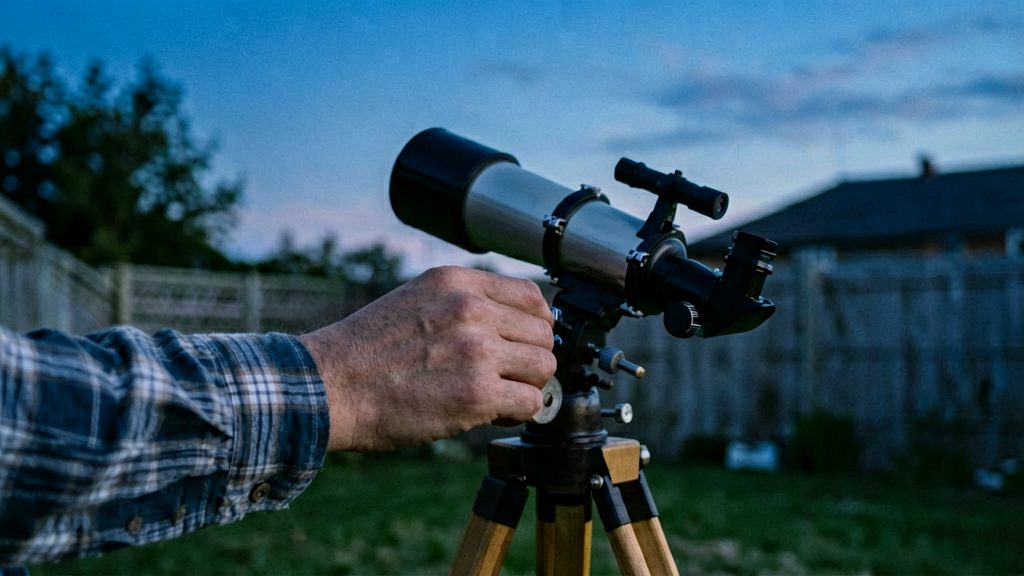
For a young observer, aperture matters more than magnification. Aperture is the diameter of the main lens or mirror. Magnification only enlarges the image the aperture has already collected, so a high power on a small scope makes things bigger without making them clearer. Mile High Astronomy (2018-04-13) goes further and calls magnification the gimmick used to sell cheap scopes.
How aperture shapes the view
A larger objective collects more light. Faint targets look brighter, and fine detail on the Moon and planets stands out more clearly against the background. Under a $200 budget, most beginner options fall in the 70 mm to 100 mm range, so aperture is the figure to compare first.
The practical magnification ceiling
Mile High Astronomy (2018-04-13) gives a rule of thumb: useful maximum magnification is about 2 × aperture in mm.
| Aperture | Approximate useful maximum magnification |
|---|---|
| 70 mm | about 140× |
| 76 mm (3-inch) | about 152× |
| 100 mm (3.9-inch) | about 200× |
Treat these figures as ceilings, not targets. Most young observers get the best results well below them, at lower powers with a wider field of view.
Why high power gives dim, shaky images
Higher magnification spreads the same collected light over a larger image, so the view looks dimmer. It also magnifies every movement. Hand tremor, a loose focuser, and a wobbling tripod all become more visible.
What this means for a first scope
- Astronomy magazine (2025-07-22) advises that higher magnification is not always better and recommends a simple scope the child will actually use.
How do you set up a kid’s telescope for success?
A child’s first night works best when the telescope is set up on solid support, the eyepiece stays steady while focusing, and the child is warm and comfortable at the eyepiece. Wobble and cold are common sources of early frustration, so setup matters as much as magnification. The steps below cover the support surface, tripod handling, site choice and clothing.
Use a stable surface for tabletop Dobsonians
Tabletop scopes need a firm base. The Orion SkyScanner 100mm TableTop Reflector, priced at $149.99 with a 3.9-inch (100mm) aperture, needs a stable surface because of its tabletop mount (Astronomy magazine, 2025-07-22). Use a sturdy table at a height where the child can sit or stand comfortably at the eyepiece. Avoid folding tables and uneven patio furniture.
Level the tripod and limit vibration
Tripod-mounted scopes move easily when touched. OPT Telescopes (2026) notes that the tripod on the Celestron Travel Scope 70 is prone to vibration, and Astronomy magazine (2025-07-22) describes the tripod and mount of the Celestron AstroMaster 70AZ as less sturdy. Extend every leg fully, lock the clamps, and set the legs on firm ground rather than soft grass. Tripod vibration is a common cause of a blurry view, so the child should adjust the focuser with fingertips and wait for the image to settle before looking.
| Setup element | What to check | Why it matters |
|---|---|---|
| Tabletop surface | Firm, flat, not shared with other objects | Prevents movement in the tube |
| Tripod legs | Fully extended, clamps locked | Reduces vibration while focusing |
| Focuser | Turned slowly, by hand on the knob | Avoids shaking the whole scope |
| Observing site | Away from streetlights and porch lamps | Keeps faint objects visible |
| Clothing | Layers, hat, gloves, warm footwear | Keeps the child still and focused |
Find a dark-enough spot and dress warmly
Light pollution reduces contrast, so choose a site away from streetlights and house lights. Give eyes time to adjust to the dark before judging the view, and keep phone screens dimmed or covered. Warm clothing is essential for a child who sits still outdoors: use layers, a hat, gloves and insulated footwear. Cold hands make focusing slow and often end the session early.
What can kids see with a beginner scope?
A small beginner scope gives a child a short list of targets that show clearly, and these are the ones to plan first sessions around. Never point the telescope at the Sun without a proper solar filter, and keep this rule firm for children. The Moon is the most rewarding, followed by Jupiter and Saturn. Deep-sky objects such as the Orion Nebula look like faint, soft patches rather than the colorful images in photographs, while the Pleiades shows as a group of bright stars. According to Astronomy magazine (2025), the small aperture of the Celestron FirstScope suits it best to the Moon and brighter planets, which is a useful guide to what to expect.
The Moon
The Moon is the strongest first target. A child can follow craters and mountain ridges most easily along the terminator, the line between lunar day and night. Low sunlight there casts long shadows, so relief stands out. The dark, smooth plains called maria appear as flat grey areas, and they are good features to find first.
Jupiter and Saturn
Jupiter appears as a small disc with a few bright points beside it. These are its four largest moons, the Galilean moons, and their positions change from night to night. Asking a child to sketch or record where they sit over several evenings turns a quick look into a repeatable activity. Fine cloud bands on Jupiter are a harder test that depends on steady air and the scope.
Saturn’s rings are usually the most striking view for a child. The planet appears as a small disc with a distinct ring around it, and the rings are visible even in small instruments.
Pleiades and Orion Nebula
The Pleiades is an open cluster of bright stars. A low-power eyepiece frames the group, and a child can compare the number of stars seen with the naked eye against the number visible through the scope. The Orion Nebula, in the sword of Orion, appears as a faint, soft glowing patch that looks grey or greenish rather than coloured.
| Target | What a child sees | Practical note |
|---|---|---|
| Moon | Craters, maria, shadows along the terminator | Best during partial phases |
| Jupiter | Disc and four Galilean moons as points of light | Moon positions change nightly |
| Saturn | Small disc with a distinct ring | Rings are the main highlight |
| Pleiades | Group of bright stars | Framed best at low magnification |
| Orion Nebula | Faint, soft glowing patch | Appears grey, not coloured |
Frequently asked questions
Which under-$200 telescope should I buy for a child?
Astronomy magazine (2025) lists the Meade Infinity 70mm AZ at $119.99 as a refractor that is sealed against dust and needs little upkeep. If your child will use the scope on a table and you have a stable surface, the Orion SkyScanner 100mm TableTop Reflector at $149.99 offers a larger aperture for the money. Check the current price before buying, because retail prices change.
Why does the image look upside down, and does that matter?
Reflectors use mirrors, so the view is inverted, meaning the image appears upside down or reversed compared with the sky chart. This does not affect spotting the Moon or planets, but children may find it confusing at first. Refractors use lenses and show a non-inverted view in most designs. Reflectors also need occasional collimation, which is aligning the mirrors, while refractors rarely need it.
Are cheap equatorial mounts worth considering for a first telescope?
Mile High Astronomy (2018) warns that cheap equatorial mounts are unstable and frustrating for kids, which is why it recommends alt-az mounts instead. An alt-az mount moves up-down and left-right, so it is easier to understand and aim. Choose an alt-az design unless you plan to upgrade to tracking later.