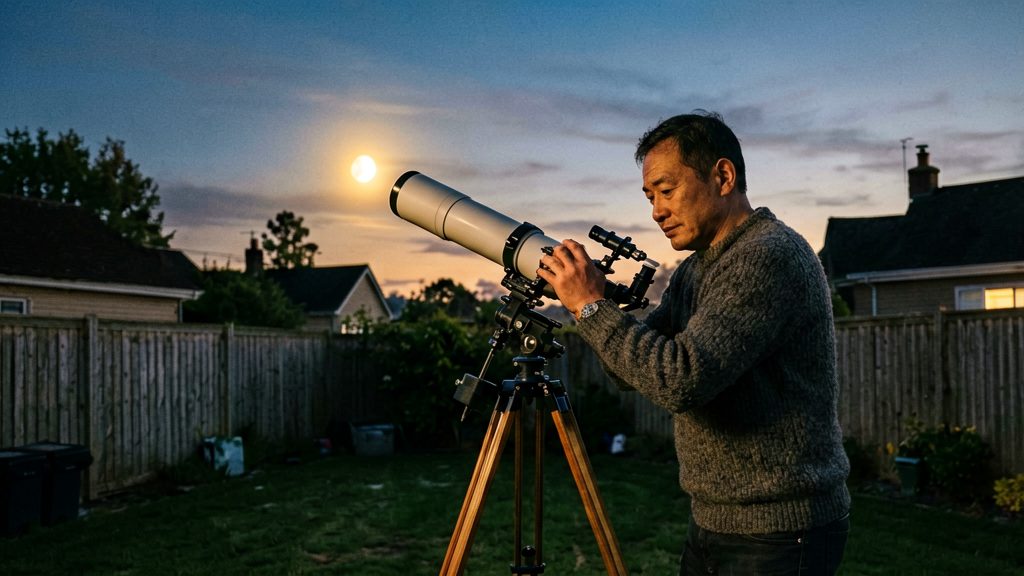
In November 2026, Saturn is the only naked-eye planet in the evening sky, at magnitude 0.5, according to Astronomy magazine. Neptune and Uranus are also in the evening sky but are too faint for casual viewing: Uranus is magnitude 5.6 and needs binoculars or a telescope in most conditions. Venus, Mercury, Mars and Jupiter are morning objects this month, so they are not visible after sunset.
Which planets are visible in the evening sky this month?
Only one planet this month is bright enough for the naked eye after dusk. Saturn is magnitude 0.5 and is the sole evening object you can identify without optical aid. Neptune and Uranus are fainter and need binoculars or a telescope (Uranus may show to the unaided eye under very dark skies), while the four remaining planets belong to the pre-dawn sky.
| Planet | Sky window in November 2026 | Notes from the source |
|---|---|---|
| Saturn | Evening | Only naked-eye planet in the evening sky (magnitude 0.5) |
| Uranus | Dusk to dawn | Magnitude 5.6; opposition on November 25 |
| Neptune | Evening | Magnitude 7.7; needs binoculars or a telescope |
| Venus | Morning | Part of a planet line in the southeast before sunrise |
| Mercury | Morning | Moves into the morning sky after inferior conjunction on November 4 |
| Mars | Morning | Close to Jupiter on November 14–17 |
| Jupiter | Morning | Close to Mars on November 14–17 |
Morning-only planets
Venus, Mercury, Mars and Jupiter form a line in the southeast before sunrise, according to BBC Sky at Night Magazine. The best viewing is 45 to 60 minutes before sunrise, with peak visibility in mid to late November (BBC Sky at Night Magazine, a UK source, so check your local sunrise time). Mars and Jupiter appear close together from November 14 to 17, which makes that stretch the most useful window for comparing the two.
Uranus opposition on November 25
Uranus reaches opposition on November 25, 2026, when it lies opposite the Sun in the sky and is visible through most of the night. Astronomy magazine and Sky at Night both give November 25, so that date is used here.
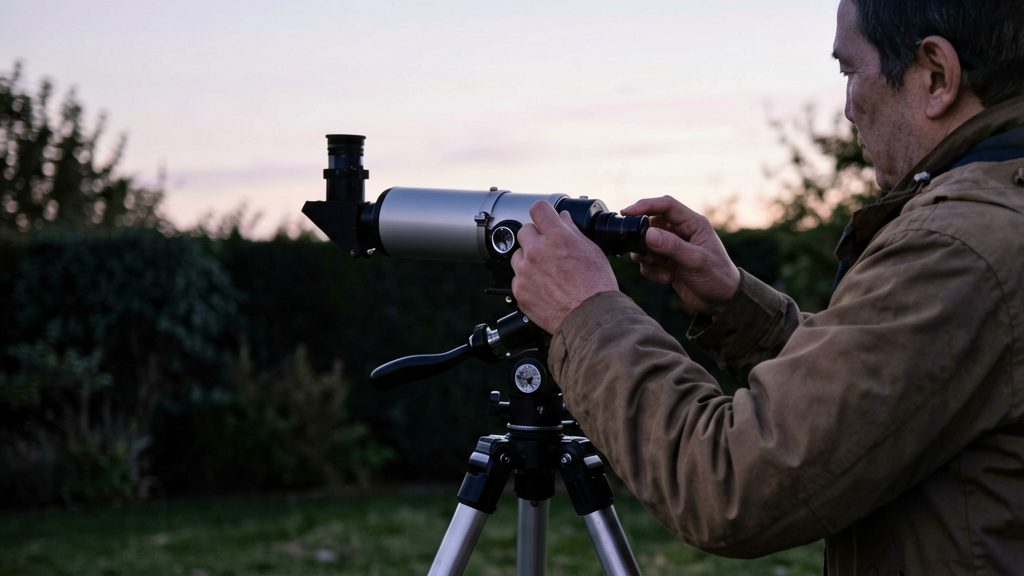
Saturn: the evening anchor
Saturn is the easiest fixed point to find before you move on to fainter targets. Start each session by locating Saturn, then use its position to orient your star hopping.
How Saturn changes through the month
Saturn gains altitude as the evening goes on, then sets around 2 a.m. local time by the end of the month. Use these reference points from Astronomy magazine as a rough check on where it should be: Use these reference points from Astronomy magazine as a rough check on where it should be:
| Reference time | Approximate altitude | Practical use |
|---|---|---|
| 1 hour after sunset, Nov. 1 | about 24° | First view as the sky darkens; a good moment to confirm you have the right object |
| 9 p.m. local time | about 50° | High enough for steady viewing and for setting up a mount |
| Month’s end, around 2 a.m. local time | setting | Last window for observing; plan your session around this limit |
Using Saturn as a starting point
- Track its altitude. Its rising height means you can estimate how much time remains before it sets. Plan your observing order so the most demanding targets come earlier, while Saturn is still well placed.
- Use it for orientation. Saturn is already well up in the evening sky and sets around 2 a.m. local time by the end of the month (Astronomy magazine). Knowing where it sits helps you judge which part of the sky you are facing.
How do I find Neptune and Uranus?
Neptune and Uranus are too faint to see as bright points without help, so you find them by star-hopping: you start from an object you can already identify and move in steps to a nearby reference star. According to Astronomy magazine, Neptune (magnitude 7.7) sits about 7° from Saturn in southern Pisces all month and needs binoculars or a telescope.
| Target | Magnitude | Starting reference | Marker star | Optical aid |
|---|---|---|---|---|
| Neptune | 7.7 | Saturn, about 7° away | 29 Piscium (guide star) | Binoculars or telescope |
| Uranus | 5.6 | Between Aldebaran and the Pleiades | Near 37 Tauri | Binoculars work |
Neptune: from Saturn to 29 Piscium
- Locate Saturn after sunset, once it has climbed clear of the horizon.
- Note Neptune’s position relative to Saturn. BBC Sky at Night Magazine places Neptune to the right of Saturn.
- Use a star chart or astronomy app to identify 29 Piscium, the guide star for Neptune. Centre it in the eyepiece, then move toward the Neptune field. Because Neptune is only magnitude 7.7, compare the field carefully against the surrounding stars.
Uranus: between Aldebaran and the Pleiades
- Start with Aldebaran, the bright orange star in Taurus, and the Pleiades, a compact star cluster that is easy to spot with the naked eye or binoculars.
- Use binoculars to frame both objects in one field. Uranus lies between them.
- Once you have the general area, look for the star near 37 Tauri, which the sources place close to Uranus, and compare the field with a chart to confirm the planet. Uranus is magnitude 5.6, so it appears as a faint, star-like point. Over several nights it shifts slightly against the background stars, which confirms it is the planet.
Why are Venus, Mars and Jupiter missing at night?
In November, Venus, Mars and Jupiter are morning objects, not evening ones. They rise ahead of the Sun, so they are only above the horizon in the hours before dawn. Astronomy magazine also places Mercury in the morning sky this month. Once the Sun is up, or the sky brightens in twilight, these planets are lost from view.
To observe them, face the southeast horizon and choose a spot with a clear, unobstructed view down to the horizon.
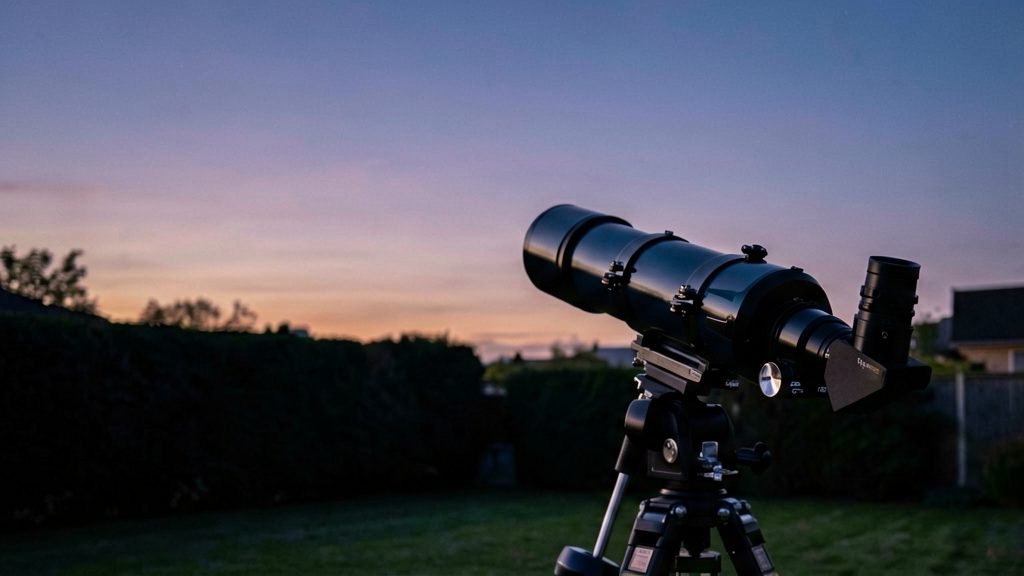
Is Mercury visible in the evening?
No. Mercury is not an evening object in November 2026. It reaches inferior conjunction on November 4, when it passes between Earth and the Sun and disappears into the solar glare. After that, it moves out to the west of the Sun and appears in the morning sky, not after sunset.
| Date (2026) | Event | What it means for observers |
|---|---|---|
| November 4 | Inferior conjunction | Mercury lies in the Sun’s direction and cannot be seen in the evening or the morning |
| November 20 | Greatest western elongation | Mercury is at its widest separation west of the Sun, the best morning position of the month |
Mercury’s western elongation is the point that matters for timing. Because Mercury sits west of the Sun, it rises before the Sun and is seen before dawn. An evening sighting would require it to lie east of the Sun, which it does not do in November.
Several practical points follow from this:
- Evening searches will fail. Looking low in the west after dusk in November will not reveal Mercury.
- Morning is the window. Once Mercury leaves conjunction, it becomes visible low in the eastern sky before sunrise, and it is best placed around its greatest western elongation on November 20.
- Low altitude is the main obstacle. Mercury never climbs far above the horizon, so a clear, flat eastern horizon matters more than a large telescope.
Best times and gear for evening viewing
Neptune and Uranus are the faintest planets in the November 2026 evening sky, so the right equipment matters more than the exact hour. According to Astronomy magazine, Uranus (magnitude 5.6) can be picked up with binoculars and may be visible without optical aid under very dark skies.
Using the Moon to find Neptune
On Nov. 19, a waning gibbous Moon lies about 5° northwest of Neptune (Astronomy magazine). Neptune is therefore southeast of the Moon, and the Moon makes a convenient starting point:
- Locate the Moon in binoculars or a low-power eyepiece.
- Move about 5° southeast of it to reach the Neptune field.
- Confirm the field against Saturn, your evening reference point.
Gear by target
| Target | Magnitude | Gear needed | Key position or date |
|---|---|---|---|
| Uranus | 5.6 | Binoculars | Opposition Nov. 25, 2026; between Aldebaran and the Pleiades, near 37 Tauri |
| Neptune | 7.7 | Binoculars or telescope | Moon about 5° northwest on Nov. 19 |
Apps and charts for finding planets
A planetarium app or a printed star chart, set to the right date, time and place, shows where each planet sits before you go outside. The steps below cover choosing a planetarium app, using printed charts for faint outer planets, and checking the settings that most often produce wrong positions.
Planetarium apps for planet positions
A planetarium app calculates planet positions for a date and time you choose and draws the sky as seen from your location. Stellarium and SkySafari are common examples. Set the date and time you plan to observe, then compare the sky with published figures for Saturn and Neptune.
If the app’s sky does not match published figures for your chosen time, check the date, time zone or location.
Printed charts for faint outer-planet fields
Neptune is too faint to see without optics, so a printed chart of the Saturn and Neptune field helps you confirm the right area before you use binoculars or a telescope. Print the chart at a scale that shows the roughly 7° gap between the two planets. A chart also avoids screen glare, which can reduce your dark adaptation. Use a red flashlight or red-filtered light to read it.
| Tool | Best use this month | Check before use |
|---|---|---|
| Planetarium app | Planet altitude and position for a set date and time | Location, time zone, date |
| Printed chart | Orientation in the faint Saturn and Neptune field | Scale and printed date |
Checking time zone and location settings
- Location: Set the app to your observing site, not your home, if they differ. Altitudes depend on your latitude and longitude.
- Time zone: The figures above are given in local time. Make sure the app’s time zone matches your local clock.
- Daylight saving: US clocks went back on November 1, so make sure your app’s time setting reflects standard time.
- Date: A wrong date can send you searching for the wrong planets.