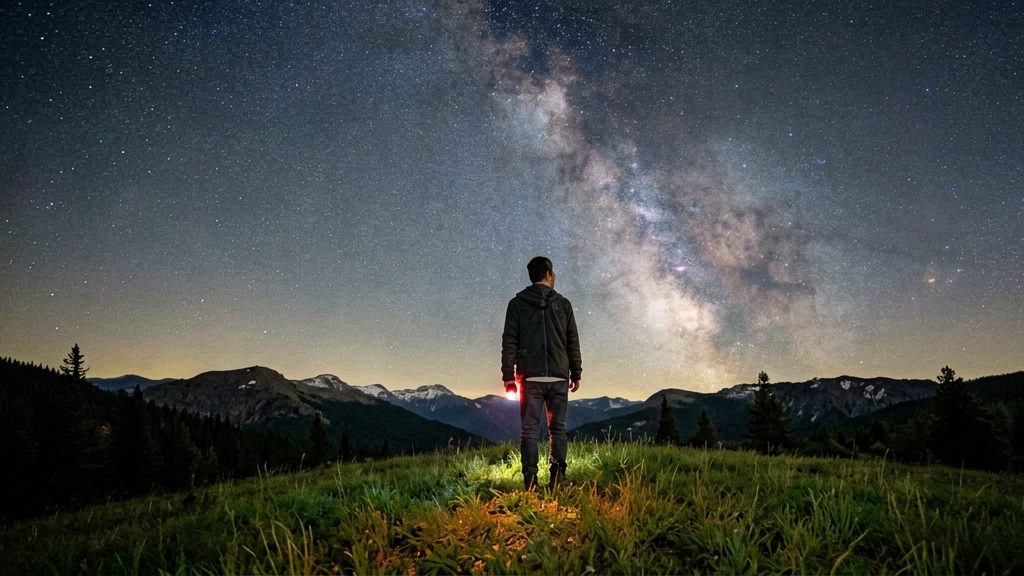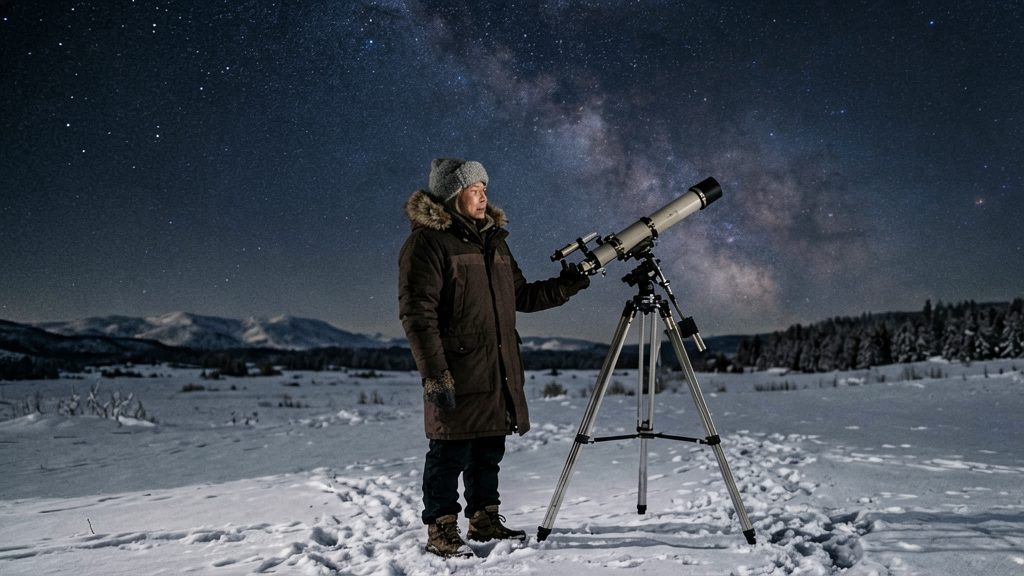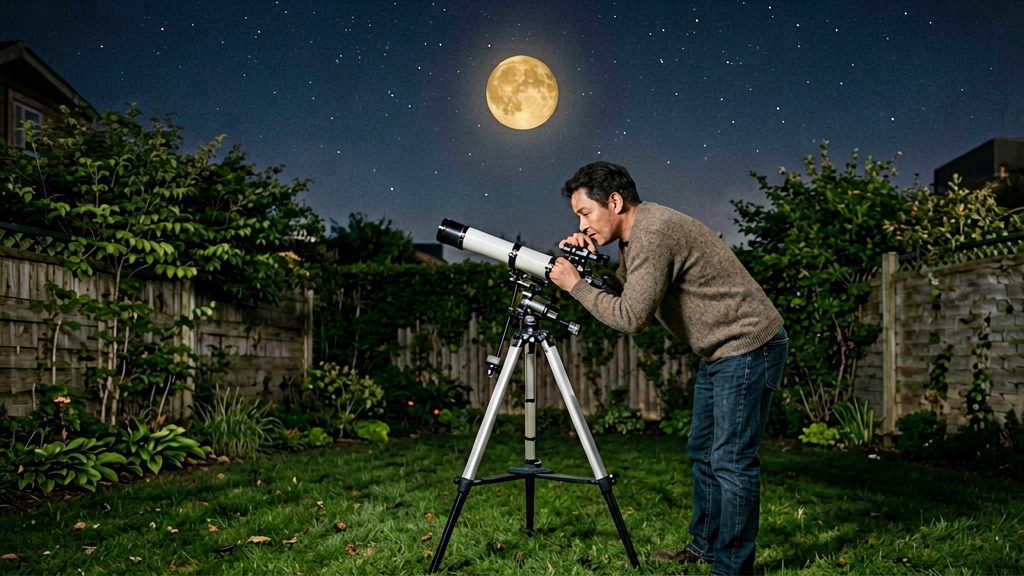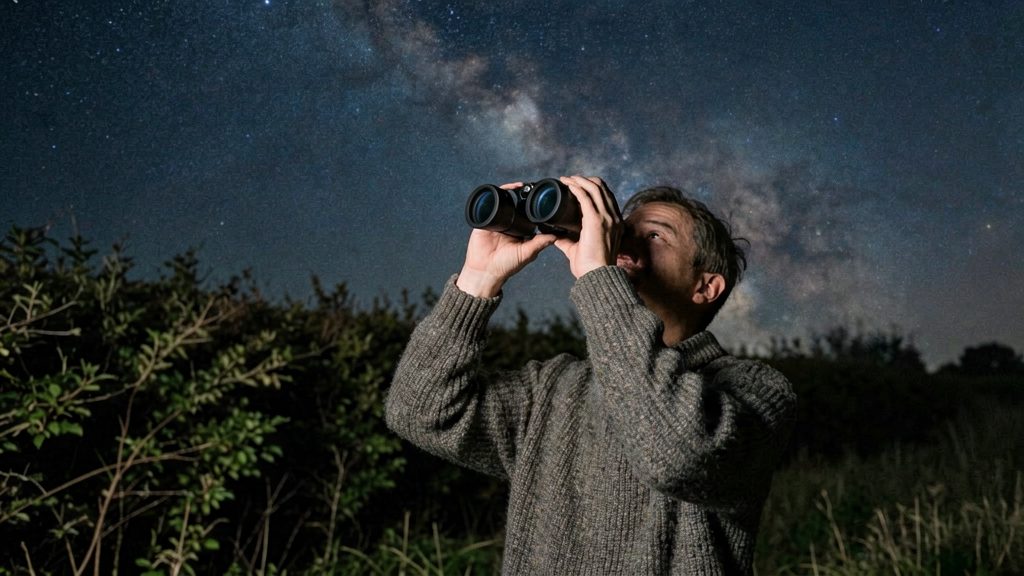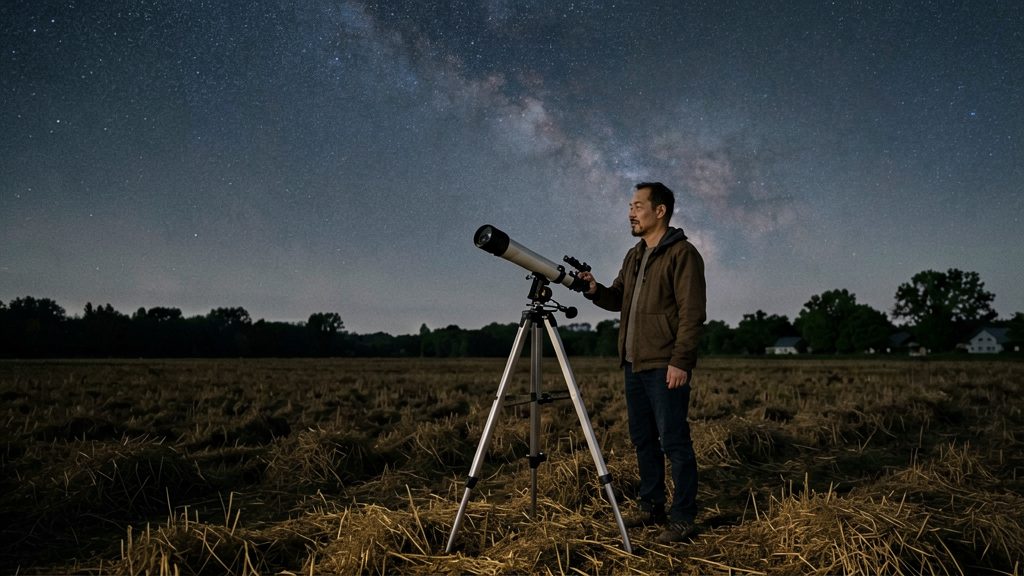
Skyglow is the diffuse brightening of the night sky caused by artificial light that the atmosphere scatters back toward the ground. Light from streetlights, parking lots and lit buildings raises the sky background, which shrinks the contrast between faint objects and the sky behind them. That loss of contrast, rather than the absence of light, is what hides targets from a city or suburban yard around Ottawa.
Why dark skies matter near Ottawa
Skyglow affects different targets unevenly. Objects with high brightness stand out against the glow, while diffuse objects blend into it.
| Target | Effect of skyglow |
|---|---|
| Milky Way | Its soft band of combined starlight fades into the glow and is usually not visible from bright urban or suburban sites. |
| Faint stars | Only the brightest stars stand out, so fainter stars that mark constellation patterns disappear and star-hopping becomes harder. |
| Galaxies and faint nebulae | Their surface brightness is low, so they lose contrast first and appear faint or absent in the eyepiece. |
| Bright Moon and planets | Less affected, so they remain observable from the city. |
Why deep-sky objects suffer most
Galaxies and nebulae spread their light over a wide area, so each part of the object is dim. Against a brightened sky, that dim light is hard to separate from the background. A bright star cluster, by contrast, concentrates its light and remains easier to pick out.
Which of the two researched dark sky sites is nearer to Ottawa?
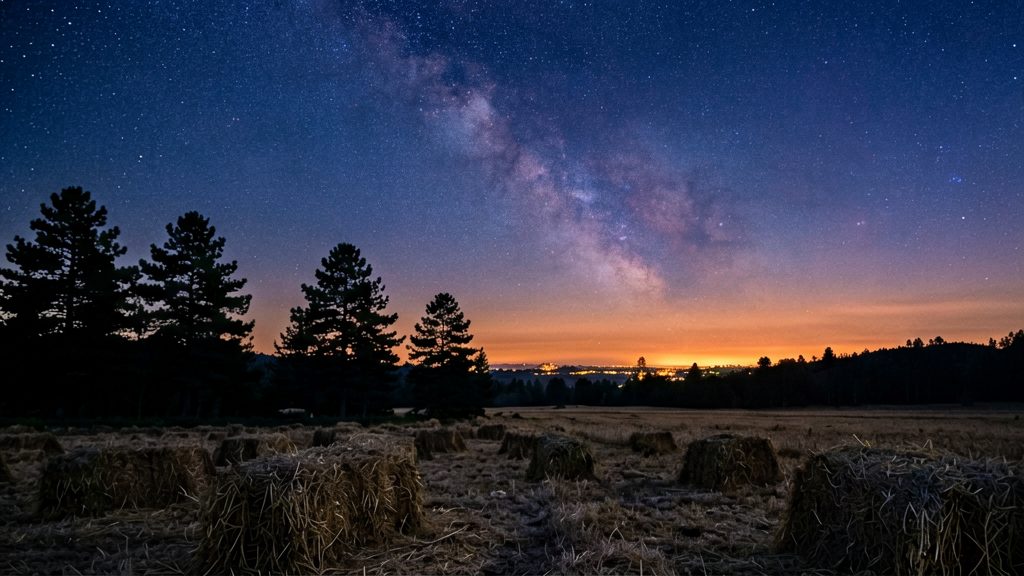
Of the two candidate sites in the available information, the Lennox and Addington Dark Sky Viewing Area near Erinsville appears to be the nearer one, but this rests on an unconfirmed drive time of roughly 1 h 45 min from a search summary. North Frontenac Astronomy Park, just south of Plevna, is about a two-hour drive west of Ottawa according to Destination Ontario (Ontario government tourism agency). Both figures are approximate, so use them for planning only.
Drive times from Ottawa
| Site | Location | Approximate drive from Ottawa | Distance status |
|---|---|---|---|
| Lennox and Addington Dark Sky Viewing Area | Near Erinsville, off Highway 41, south of Kaladar | About 1 h 45 min; nearest town reported as Napanee | Unconfirmed, from a news or search summary |
| North Frontenac Astronomy Park | Just south of Plevna | About two hours west | Tourism page estimate |
Ranking by darkness and access
- Access: Lennox ranks first on stated drive time.
- Darkness: The available facts include no light pollution ratings or sky brightness measurements for either site. A darkness ranking cannot be stated from them. The Lennox listing calls it one of the most southerly dark sky sites in Ontario, which describes its position, not a measured sky quality.
Confirming site status before travelling
- Check each site’s current listing on the Destination Ontario website, which is the only source used here and may be out of date.
- Contact the local municipality or county office for North Frontenac and Lennox and Addington to confirm that the site is open and the access road is usable.
- Consult the International Dark-Sky Association’s places directory and the RASC to cross-check whether a site is listed.
North Frontenac Astronomy Park near Plevna
North Frontenac Astronomy Park is just south of Plevna, in the municipality of North Frontenac. It offers a dedicated stargazing setup with an on-site telescope, parking, picnic benches, electrical services and accessible washrooms. According to Destination Ontario (Ontario government tourism agency), North Frontenac is Canada’s first municipality to be awarded the Dark Sky Preserve designation. That claim comes from a tourism page, so confirm the current status with the International Dark-Sky Association before planning a visit around it.
The park’s main facilities are:
- Fred Lossing Telescope: available on site for visitors.
- Parking: on-site parking for visitors.
- Picnic benches: seating between observing sessions.
- Electrical services: listed among the park’s facilities.
- Accessible washrooms: on site, which matters for visitors with mobility needs and for families with young children.
Lennox and Addington viewing area
The Lennox and Addington Dark Sky Viewing Area sits near Erinsville, off Highway 41 south of Kaladar. According to Destination Ontario (Ontario government tourism agency), it is one of the most southerly dark sky sites in Ontario, which describes its position, not a measured sky quality. It is not an officially designated dark sky preserve. The source describes it as one of the most southerly dark sky sites in Ontario, but no sky quality data is available, so check the sky yourself before each trip.
Undesignated status and southerly location
The lack of preserve status matters mainly for planning. Without a formal designation, the surrounding lighting may change over time, so the darkness you find on one visit may differ from the next. The southerly position is the site’s main advantage for observers who cannot easily reach the northern preserves.
Free admission, year-round access and the concrete pad
Admission is free, and the site is open year-round, so you can schedule trips around the Moon phase, planetary positions or a meteor shower peak rather than a fixed opening window. Parking is available, and a concrete pad is provided for tripods or telescopes. A hard, stable surface keeps mount legs from sinking into soft ground, which helps when you are aligning a telescope or leaving equipment set up between sessions.
Can you stargaze close to the city?
Yes, but inside Ottawa you mostly get organised community events and a limited sky. The nearest dark sky option in the reference material, the Lennox and Addington Dark Sky Viewing Area, is still a drive of roughly 1 h 45 min (unconfirmed). Within the city, the main organised option is the summer stargazing party run by RASC Ottawa Centre volunteers.
Organised events near Ottawa
RASC Ottawa Centre volunteers host free, family-friendly stargazing parties on select summer dates in the parking lot of the Carp Branch of the Ottawa Public Library, at 3911 Carp Road. These are community events, not dark sky sites, so the sky above them is affected by the surrounding town. The events suit first-time observers who want to use telescopes run by experienced members without travelling. I could not confirm the current schedule, so contact RASC Ottawa Centre directly before you plan a visit, because the dates are limited to select summer evenings.
Dark viewing area option
The Lennox and Addington Dark Sky Viewing Area offers a practical alternative for independent observing.
Limits of an urban sky
Compared with a dark sky site, the city sky limits several targets:
- Faint deep-sky objects such as galaxies and nebulae are harder to see or invisible through a telescope.
- The Milky Way is usually not visible to the naked eye from the centre of town.
- Bright targets remain usable: the Moon, bright planets, and many double stars can still be observed well from a suburban parking lot.
When is the best season to go?
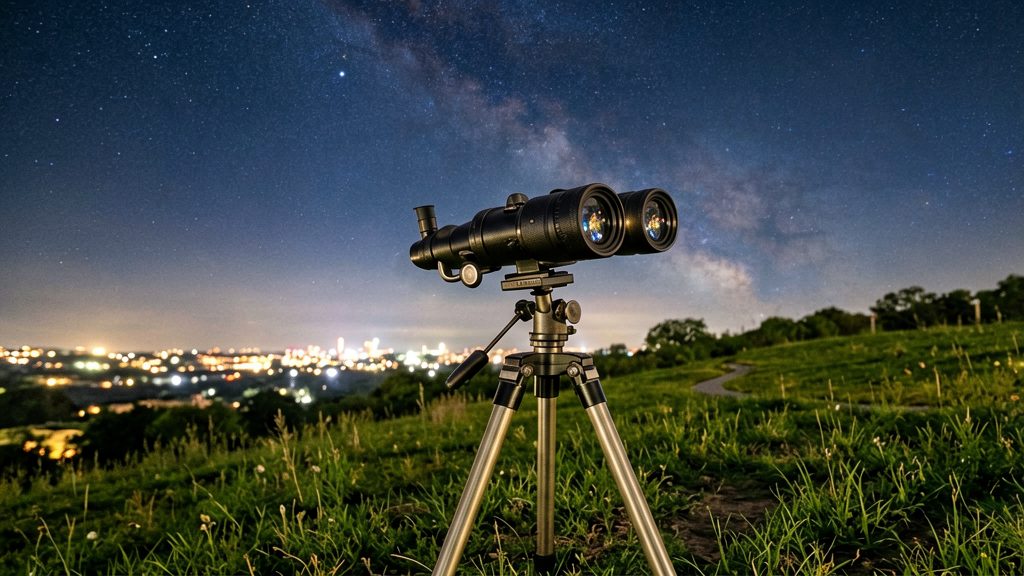
Destination Ontario names fall and winter as the best stargazing period near Ottawa, citing cool air, low humidity and early sunsets. Winter nights can be very cold, so dress for it. Destination Ontario identifies fall and winter as the best stargazing period, citing cool air, low humidity and early sunsets. Each factor affects the observing session in a different way.
Cool, dry air
Cool air keeps the observer comfortable for longer sessions and reduces the thermal shimmer, or seeing problems, that can blur fine detail on planets and double stars. Low humidity matters for optics: dry air makes dew and frost less likely to settle on eyepieces, finder scopes and the corrector plate of a Schmidt-Cassegrain.
Early sunsets
Early sunsets bring full darkness sooner in the evening. This gives a longer usable observing window before midnight, which is useful for beginners who are still learning star-hopping routes and deep-sky targets.
Trade-offs between summer and autumn skies
| Factor | Autumn and winter | Summer |
|---|---|---|
| Air temperature | Cool | Warmer |
| Humidity | Low, per Destination Ontario | Not covered by the source |
| Evening darkness | Arrives earlier | Arrives later |
| Milky Way core | Low in the southwest early in autumn evenings; not visible in winter evenings | Higher in the evening sky |
Summer offers a better view of the Milky Way’s core in the early evening, but the nights are shorter. Autumn gives a longer dark window, but the Milky Way’s core sinks below the horizon early in the evening and is not visible in winter. Plan summer sessions around the core, and autumn and winter sessions around deep-sky objects and transparency.
Red light and etiquette at dark sites
At a shared observing site, every light and sound reaches other observers. Destination Ontario advises visitors to switch off vehicle headlights and to use red light on flashlights or headlamps. Following those two steps, keeping conversation quiet, and dimming phone screens keeps the site usable for everyone present.
Switching off vehicle headlights on arrival
- Turn off vehicle headlights as soon as you park, before you step out.
- Check that interior and dome lights are off, and close car doors gently.
- Walk to your setup spot with a red light rather than the car’s lights.
- Do not leave the engine running with lights on while you set up equipment.
Red light for flashlights and headlamps
Red light is less disruptive to other observers than white light. Use it for reading star charts, handling equipment, and walking between cars and the observing area.
| Light source | Recommended handling |
|---|---|
| Flashlight | Use red light; aim the beam at the ground or at your chart |
| Headlamp | Select the red mode and keep the beam below eye level |
| Phone | Use the night or red display mode, and keep brightness at its lowest usable level |
Most headlamps include a red mode, but the setting varies by model. Check the product manual to confirm how to select it.
Keeping noise and phone screens low
- Keep conversation at a low volume, particularly near telescopes and other observers’ setups.
- Silence phone notifications and avoid playing audio or video aloud.
- Keep phone screens dim and face them away from others when you need to check something.
- If you must check a phone, use its red or night mode at the lowest brightness and shield the screen from others.
What to pack and how to plan
A first night at a dark site works best when you plan around three things: the cloud forecast, the drive, and the time your eyes need to adapt. Both sites are reached by car, so the plan starts with the trip itself.
Step-by-step plan
- Check the cloud forecast for your observing hours. Look at cloud cover for the hours you will actually be outside, not only the daily summary. A clear early evening can turn cloudy later, so check the forecast again on the day.
- Time your arrival before full darkness. Fall and winter sunsets are early, so plan to arrive while there is still daylight. You can then set up the tripod and mount, and find the parking area, while you can still see.
- Give your eyes time to adapt. Once lights are off, wait before judging faint objects. Begin with bright targets and move to fainter ones as your vision settles.
Packing list
| Item | Purpose |
|---|---|
| Layers (base, insulating mid layer, windproof outer shell) | Fall and winter air is cool, as Destination Ontario notes, and you will be still for long periods. |
| Insulated flask | Keeps warm drinks hot through a long session without repeated trips to the car. |
| Spare batteries | Cover the mount, go-to controller, headlamp and phone. Keep spares in an inner pocket, since cold drains batteries faster. |