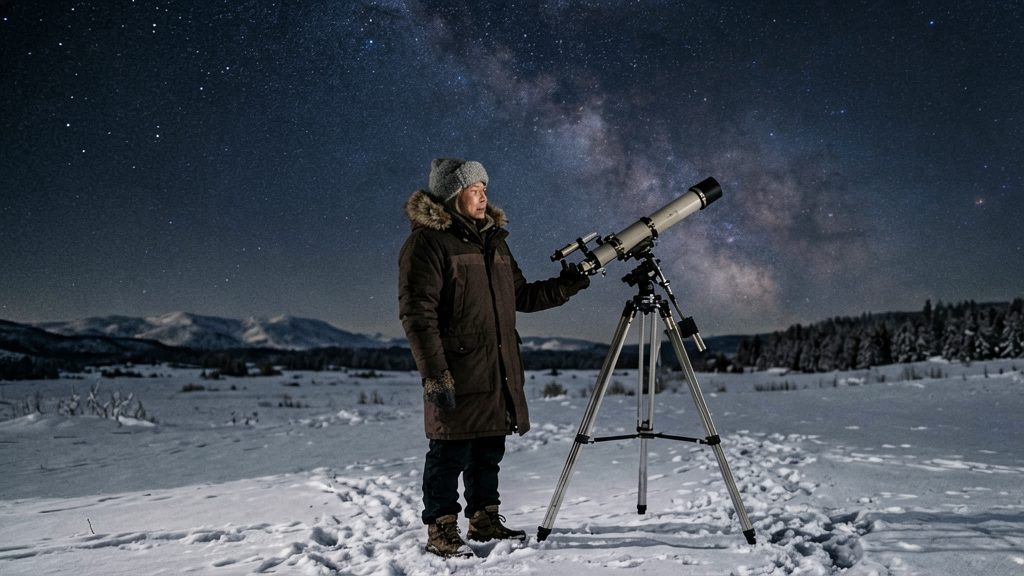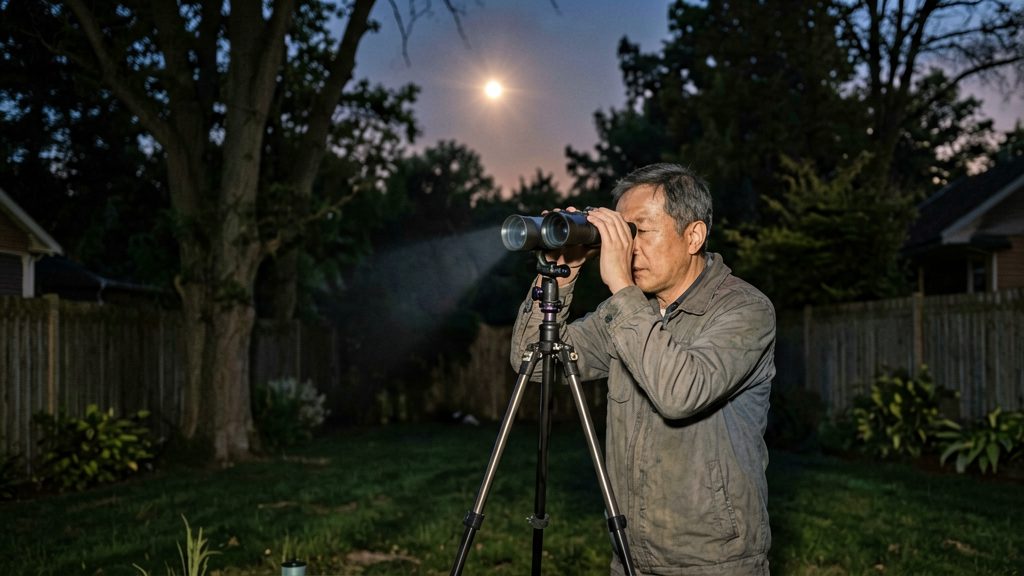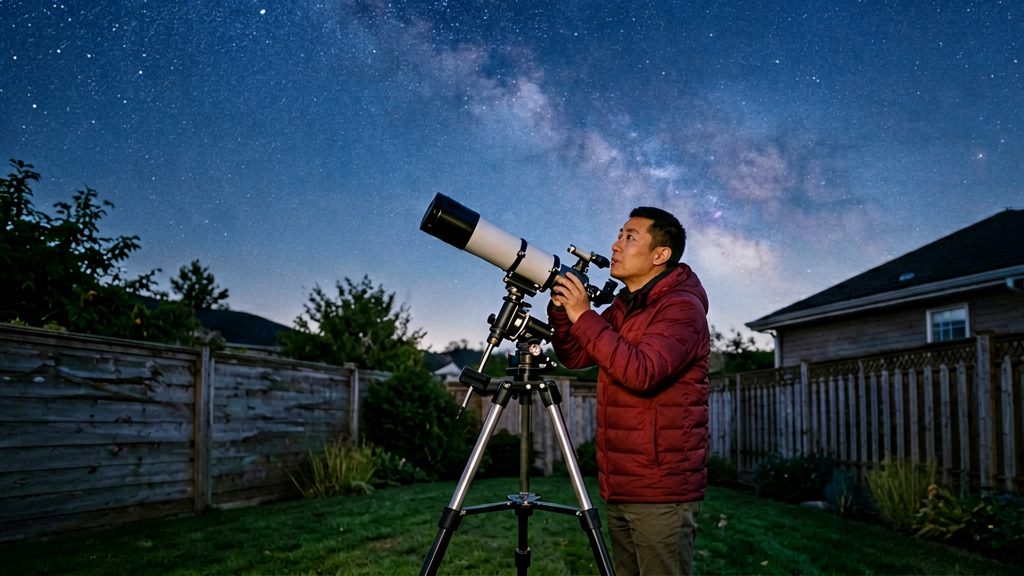
In November 2026, Saturn is the only planet easily visible to the naked eye in the evening sky, at magnitude 0.5. Before dawn, Venus, Jupiter, Mars and Mercury are in the morning sky. Venus is the brightest, at magnitude -4.2 on 1 November, and Jupiter is about -2.0. Mercury is the hardest to see, low in the dawn southeast. Uranus and Neptune are outer planets that need binoculars or a telescope. Most of the month’s bright planets therefore appear before sunrise, not in the evening.
What planets are visible tonight in November?
Evening planets: Saturn, Uranus and Neptune
- Saturn is the only planet easily seen without optical aid in the evening sky. It sits in Cetus, near the Pisces border, at magnitude 0.5.
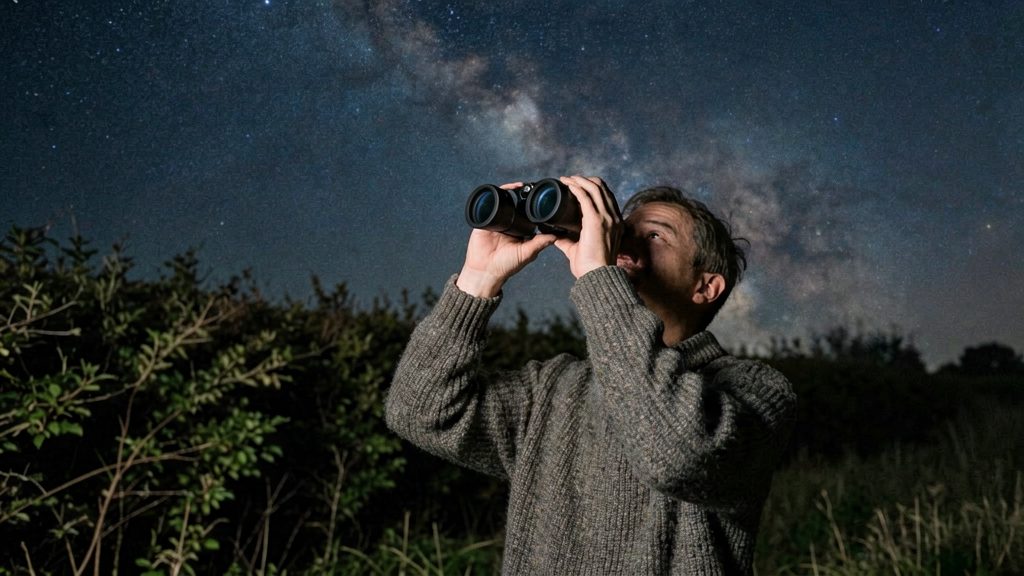
- Uranus (magnitude 5.6) is in Taurus. Binoculars bring it within easy range.
- Neptune (magnitude 7.7) lies about 7° from Saturn and needs binoculars or a telescope.
Morning planets versus evening planets
Venus, Jupiter, Mars and Mercury are all dawn objects in November. Saturn is the only evening planet that is bright enough to pick out easily. On the magnitude scale, lower numbers mean brighter objects, so Venus at -4.2 outshines Saturn at 0.5 by a wide margin.
Magnitude and sky position comparison
| Planet | Sky window | Magnitude | Position in November 2026 |
|---|---|---|---|
| Saturn | Evening | 0.5 | Cetus, near the Pisces border |
| Venus | Before dawn | -4.2 (1 November) | Low in the southeast; 1.3° from Spica on 7 November |
| Jupiter | Before dawn | About -2.0 | Leo, near Regulus |
| Mars | Before dawn | +0.7 to +0.8 | Leo, near Regulus; about 1° north of Jupiter from 14 to 17 November |
| Mercury | Dawn | -0.5 (morning after greatest elongation) | Very low in the dawn southeast |
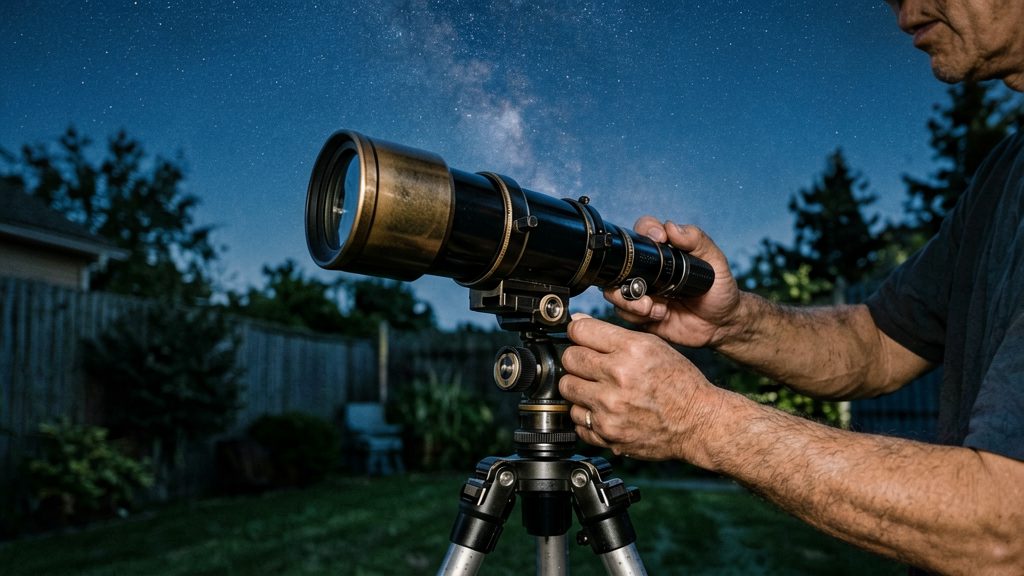
Evening sky: Saturn, and Uranus and Neptune with binoculars
Saturn lies in Cetus near the border with Pisces at magnitude 0.5, and by month-end it sets around 2 a.m. local time, according to Astronomy magazine.
| Object | Magnitude | Position | Optics needed |
|---|---|---|---|
| Saturn | 0.5 | Cetus, near the Pisces border | Naked eye |
| Uranus | 5.6 | Taurus | Binoculars |
| Neptune | 7.7 | About 7° from Saturn | Binoculars or telescope |
Finding Saturn in the early night
Start observing soon after dusk, while Saturn is still well above the horizon. Use it as your reference point for the fainter targets. On 20 November the Moon sits near Saturn in the evening, according to Astrobackyard, so the Moon can help you locate the planet on that date.
Uranus at opposition on 25 November
Uranus reaches opposition on 25 November, when it lies opposite the Sun and is at its best for observing. Use binoculars to look for a faint, blue-green point of light in Taurus. Compare its position with a star chart, since it looks like a dim star and is not easily identified by shape alone.
Locating Neptune from Saturn
Neptune lies about 7° from Saturn. At magnitude 7.7 it is too faint for the naked eye. To find it:
- Start with Saturn in view, then move about 7° toward Neptune’s charted position. A telescope’s narrow field will not show both objects at once.
- Use a star chart to identify the field stars between Saturn and Neptune’s position.
- Scan the area with binoculars or a telescope, moving slowly so you can compare star patterns against your chart.
Can you see planets before sunrise?
Yes. According to BBC Sky at Night Magazine (2026), the best time to see the Mercury, Venus, Mars and Jupiter morning line-up is 45–60 minutes before sunrise, looking southeast from a clear, flat horizon. The planets sit low in the dawn sky, so the horizon you have matters as much as the time you pick.
Ideal observing window
- Start checking about 60 minutes before the local sunrise time and finish by about 45 minutes before it.
- Look toward the southeast first. The brightest planet, Venus, is the easiest to find.
- Confirm the sunrise time for your exact location in a planetarium or almanac app, or on your local weather service’s site. Sunrise times differ across a single city’s districts and across latitudes.
Clear, flat southeast horizon
Planets this low can be blocked by ground-level features that are harmless at higher altitudes. Check the following:
- Obstructions: trees, buildings, hills, and power lines in the southeast sector.
- Open ground: a rooftop, a field, or an elevated, open parking lot often gives a better view than a yard surrounded by walls.
- Direction: use the compass in a phone or a star chart app to confirm which way is southeast before you start.
Twilight brightening near sunrise
The sky brightens steadily as the Sun approaches the horizon, and faint objects fade as this happens. Planets such as Venus, which are very bright, remain visible longer into twilight than faint targets do. Most pre-dawn observing is therefore best done early in the 45–60 minute window, before the sky lightens, and the brightest planet, Venus, stays visible longest.
Mars and Jupiter conjunction: when to look
Mars and Jupiter make their closest approach between 14 and 17 November 2026, when Mars passes about 1° north of Jupiter. Their angular separation is 1.2° on 15 November. Both rise together before dawn in Leo, close to the star Regulus. Their small separation makes the pair easy to locate as a single target.
Closest approach dates
- 14 to 17 November: Mars passes about 1° north of Jupiter, with the closest approach falling within this window.
- 15 November: The two planets are 1.2° apart, a gap that fits inside the field of most binoculars.
Brightness of the pair
| Planet | Approximate magnitude | Note |
|---|---|---|
| Jupiter | -2.0 | The brighter of the two, as reported by BBC Sky at Night Magazine (2026) |
| Mars | +0.7 to +0.8 | Sky at Night gives +0.7 and Astronomy gives +0.8 |
Mars is much fainter than Jupiter, so it looks like a reddish point of light next to a brilliant white one. Check the current magnitudes in your app before observing.
The Regulus triangle on 22 November
On 22 November, Mars and Jupiter form a tight triangle with Regulus, the bright star in Leo. Compare it with their positions around 15 November to see how they shift against the background stars.
Mercury and Venus at dawn
Venus is the easiest of the two inner planets to find in the dawn twilight this month. It sits low in the southeast before sunrise. On 7 November it sits 1.3° from Spica, with a thin crescent Moon nearby. That pairing makes a good starting point, because the Moon and Spica help you confirm which bright point is Venus.
Mercury is much harder to see. Find Venus first, then look lower toward the southeast horizon. From Canadian latitudes (45–55°N) Mercury will sit lower than the 7° quoted for mid-northern charts, so it may be very hard to see. Mercury reaches its greatest western elongation, 20° from the Sun, late on 20 November. The following morning it shines at magnitude -0.5 and sits about 7° high one hour before sunrise.
| Object | Date | Brightness or position | Notes |
|---|---|---|---|
| Venus | 1 November | Magnitude -4.2 | Low in the southeast before dawn |
| Venus and Spica | 7 November | 1.3° apart | Thin crescent Moon nearby |
| Mercury | Late 20 November | Greatest western elongation, 20° from the Sun | Very low in the dawn southeast |
| Mercury | Morning after elongation | Magnitude -0.5 | About 7° high, one hour before sunrise |
Best viewing tips for Canadian skies
November observing in Canada combines long, cold nights, light pollution near populated areas, and early sunsets. The charts for this month’s planets are drawn for about 40°N, while most of Canada lies between 45°N and 55°N. Planets will sit lower in the sky for observers farther north, and local clock times will differ from published times. Plan each session with your own latitude and local sunset time.
Protecting optics and eyepieces from cold
Fog forms when warm, humid air meets a cold lens or eyepiece surface. Let the telescope reach outdoor temperature before observing, and keep eyepieces and accessories in a sealed bag or case indoors until you need them. Keep dust caps on between targets so the optics stay closed to moist air. If condensation builds on the corrector plate or eyepiece, a dew heater strap or a dew shield on the tube can reduce it. Batteries for go-to mounts and red-dot finders also lose power faster in cold weather, so carry spares in an inside pocket.
Choosing a dark site
Light pollution from streetlights and building lights reduces contrast, and it hides faint deep-sky targets first. Pick a site with a clear, unobstructed horizon in the direction of your target. Local astronomy clubs and their member lists are a practical source for dark sites near you.
Moonlight is the other factor to plan around. The New Moon falls on 9 November, so the first half of the month gives the darkest skies for deep-sky observing. The Moon sits near Saturn in the evening on 20 November, which brings brighter moonlight to the sky that night.
Planning sessions around early sunsets
Early winter sunsets open the evening observing window sooner, but the planets rise and set at different times through the month. Check the sunset, moonrise and planet set times for your own city before you choose a start time.
| Period | Observing use |
|---|---|
| Early November (New Moon 9 November) | Darkest skies for faint deep-sky targets from a dark site |
| 20 November | Moon near Saturn in the evening; moonlight reduces contrast |
| Late November | Saturn available into the early hours; set your start time from local sunset |
Other November sky events: Leonids and the Beaver Moon
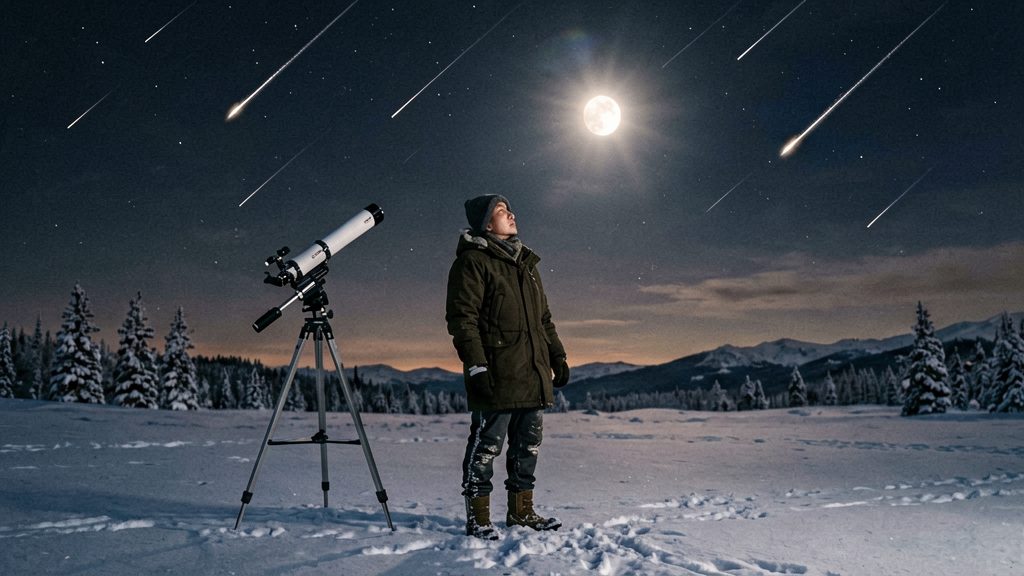
The two other notable November events are the Leonid meteor shower, which peaks on the night of 17/18 November, and the full Beaver Moon, a perigee supermoon on 24 November. The two need opposite conditions. The Leonids are best seen after the Moon has set, which leaves the sky dark that night. The Beaver Moon is bright enough to wash out faint meteors and deep-sky targets, so it suits Moon observing instead.
| Event | Date | Sky condition |
|---|---|---|
| Leonid meteor peak | Night of 17/18 November | Dark once the Moon has set |
| Beaver Moon (full, perigee) | 24 November | Moon up for much of the night, bright sky |
Leonid meteor peak
- Peak night: 17/18 November, according to BBC Sky at Night Magazine and Astronomy. One source gives 16/17 November, so confirm the peak against a second almanac if timing matters for your plans.
- Expected rate: low, at most about 10 to 15 meteors per hour under dark skies.
- Dark-sky timing: the Moon sets that night, leaving dark skies. Moonset time depends on your location, so look up the local time for your site before you go out.
- Method: use a reclining chair, face a wide area of sky rather than a single point, and avoid white light, which resets your dark adaptation. Telescopes and binoculars have a narrow field of view and are not suited to meteor watching.
Beaver Moon and perigee
- Perigee full Moon: the full Moon falls on 24 November and is a perigee supermoon, meaning it is at its closest point in its orbit to Earth. It appears slightly larger than a typical full Moon. The sources do not give a measured size difference, so treat that as a qualitative effect.
- Dark-sky timing: the full Moon rises near sunset and stays up through the night, so the sky is not dark. Plan Moon observing for this date and leave faint-object work for other nights.
Which apps and tools show tonight’s planets?
Planetarium apps and printed star charts both show where the planets sit tonight. Stellarium and SkySafari plot planet positions on a live sky map that updates when you change the date and time. Set your exact location and time zone first, then search for each planet by name and read its altitude and rise and set times. A printed star chart needs no battery or signal, so it works as an offline backup.
Planet positions on screen
- Stellarium is planetarium software available for computers and as a mobile app. You can set any date and time to preview the sky, which is useful for checking how the planets will look later in the month.
- SkySafari is a mobile app. It suits outdoor use, but the screen brightness and battery drain matter during a long session.
Rise and set times
Rise and set times are calculated for the coordinates you enter, so use your own location rather than a distant preset city.
To verify a timing, set the date to the night you plan to observe and compare the result with a published figure.
Printed star charts as offline backup
Print a sky map for your latitude and mark the date and time you plan to observe. Use a red-filtered or dimmed light to protect your night vision. A printed chart shows the sky only as it was drawn, so confirm each planet’s position against your app before you go out.
| Method | Strength | Limit |
|---|---|---|
| Stellarium (computer) | Set any date and time to preview the sky | Requires a computer |
| SkySafari (mobile) | Portable, used outdoors | Battery and screen light |
| Printed star chart | Works with no power or signal | Fixed to its drawn date and latitude |